

Rising Concerns Over Foreign Influence in Japan
Yuta Kato, a 38-year-old hairdresser based in Tokyo’s upscale Ginza district, has grown increasingly frustrated with foreigners who fail to understand Japan’s social etiquette. He often encounters situations where individuals block the streets near his workplace or play loud videos on their phones, disrupting the flow of daily life. These experiences have contributed to his growing alignment with the right-wing Sanseito party, which has gained significant support in recent elections.
The party’s messages about foreign influence and cultural preservation resonate with many Japanese voters, particularly those who feel that the country is being subtly changed by external forces. Kato, like many supporters, relies on YouTube and other social media platforms for information, which the party has effectively used to promote its “Japanese First” agenda.
Japan’s foreign-born population makes up only 3% of the total, significantly lower than in the United States and Europe. However, the influx of tourists in recent years has made foreigners more visible in major cities. While Sanseito does not directly target specific immigrant groups, it capitalizes on broader concerns, such as the behavior of tourists and conspiracy theories about Chinese influence.
Chinese Influence and Anti-Immigrant Rhetoric
Chinese residents are the largest group of foreign nationals in Japan, and they are frequently at the center of online anti-immigrant rhetoric. Kato believes that the Chinese are quietly taking over the country, a sentiment echoed by others in the community. The party’s leader, Sohei Kamiya, has raised concerns about Chinese citizens purchasing land and resources in Japan, with one policy goal being to “stop the silent invasion of Japan by foreign forces.”
Despite these claims, the party has not publicly commented on the allegations of xenophobia. Kamiya has previously denied such criticisms, emphasizing the party’s focus on national interests rather than discrimination.
Demographics and Political Trends
Sanseito has found particular support among younger voters, especially those aged 18 to 39. Men tend to favor the party more than women, according to a poll conducted by NHK. This trend mirrors similar patterns seen in other democracies where right-wing parties gain traction among younger demographics.
In contrast, the ruling Liberal Democratic Party (LDP), which lost its majority in the recent election, sees stronger support from older voters, particularly those over 70. The LDP lacks a clear gender divide in its support base, highlighting the generational shift in political preferences.
Online Presence and Digital Strategy
Sanseito’s strong online presence has allowed it to connect with younger voters more effectively than the LDP. The party’s official YouTube channel has three times as many followers as the LDP’s, with higher engagement rates on its content. A study by Asahi newspaper found that Sanseito’s digital strategy has been instrumental in reaching this demographic.
Jeffrey Hall, a lecturer at Kanda University of International Studies, notes that YouTube has become a key platform for the party. While YouTube has not responded to inquiries about Sanseito’s use of the platform, the company’s community guidelines emphasize monitoring content to remove material promoting harmful behavior.
Broader Appeal and Political Goals
Born during the COVID-19 pandemic, Sanseito initially spread conspiracy theories about vaccinations. It has since broadened its appeal with policies targeting immigration and economic issues, such as rising living costs. The party also seeks to amend Japan’s pacifist constitution and restore the Emperor’s authority, ideas that have been promoted by other right-wing groups.
These fringe ideas are often accompanied by provocative tactics, such as black trucks blaring imperial-era military songs across the country. While such activities have traditionally gone unnoticed, Sanseito aims to emulate the success of far-right groups in Europe, including Germany’s AfD and Britain’s Reform UK.
Public Reaction and Protests
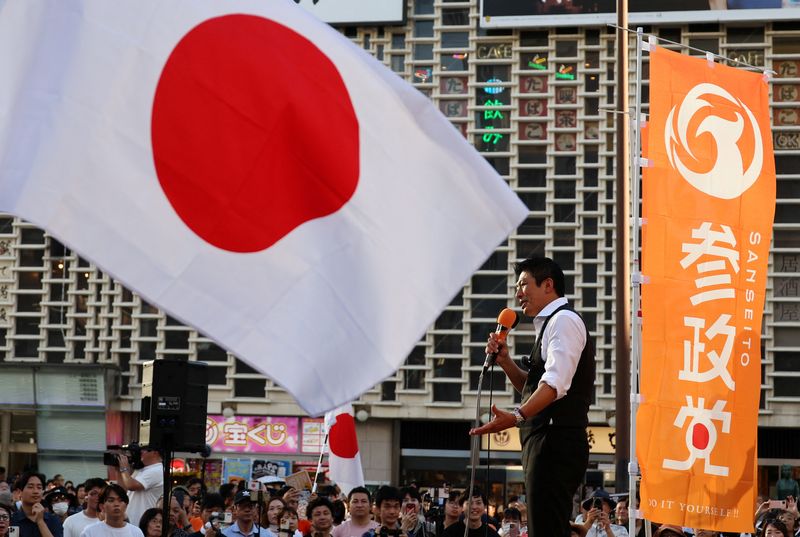
The rise of Sanseito has sparked backlash from those who fear the normalization of xenophobic attitudes. At a recent rally outside Tokyo’s Shimbashi train station, supporters cheered for newly elected lawmakers, while dozens of protesters attempted to disrupt the event.
Miroko Kato, a 42-year-old haiku poet and protester, criticized the party for spreading lies and diverting frustrations onto outsiders. “We’re here to say: we’re watching you!” she said, highlighting the growing concern among critics of the party’s message.






















Comment