

Political Tensions Over Scottish Independence Referendum
The debate over a potential second Scottish independence referendum has sparked significant political discourse, with various leaders expressing their views on the matter. Recent discussions have highlighted the challenges and complexities surrounding the issue, particularly in light of previous votes and ongoing political dynamics.
The Role of International Leaders
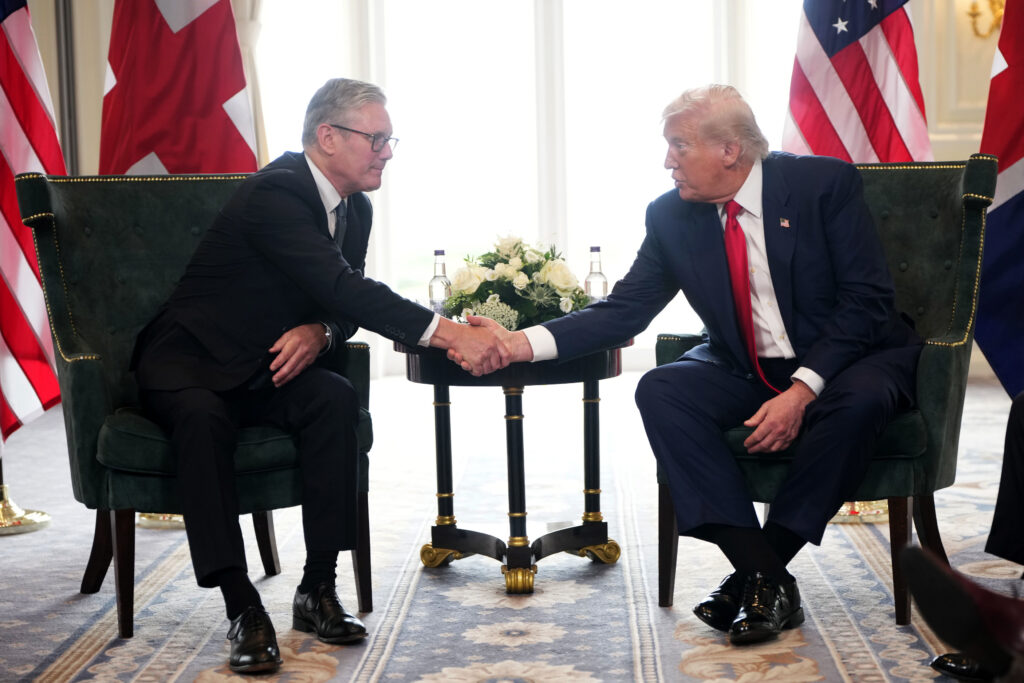
During a press conference at Trump Turnberry in Ayrshire, where US President Donald Trump and other officials were engaged in bilateral talks, the topic of Scottish independence was brought up. While Trump expressed reluctance to involve himself in the internal politics of Scotland, he did make some remarks about the timing of future referendums. He suggested that not enough time had passed since the 2014 vote, implying that frequent referendums could be detrimental to a nation’s stability.
Trump, who has a personal connection to Scotland through his mother’s heritage, acknowledged the importance of the issue but emphasized his focus on domestic matters. His comments reflect a broader sentiment among some international figures who believe that the timing and frequency of such votes require careful consideration.
Shift in SNP Strategy
John Swinney, the Scottish government’s Finance Secretary, has proposed a new approach to securing a second independence referendum. This plan calls for a “legal referendum recognised by all” if the Scottish National Party (SNP) achieves a majority in the upcoming Holyrood election. This marks a departure from the party’s previous stance, which focused solely on obtaining a pro-independence majority, regardless of the involvement of other parties.
Swinney’s proposal highlights a strategic shift, aiming to ensure broader recognition and legitimacy for any future referendum. He also referenced past actions taken by the SNP, such as the 2011 election that led to the 2014 referendum, as a means of breaking the current political stalemate.
Reactions from Key Figures
Sir Keir Starmer, the leader of the Labour Party in the UK, has criticized the idea of another referendum, calling it “the politics of yesteryear.” He emphasized the importance of unity within the United Kingdom, particularly during times of global uncertainty. Starmer argued that the focus should be on strengthening the UK as a whole rather than on constitutional issues.
He pointed to the recent US-UK trade deal as an example of what can be achieved when the four nations of the UK work together. Starmer believes that this collaboration is essential for the well-being of all regions, including Scotland.
Focus on Domestic Priorities
Starmer also encouraged the First Minister to concentrate on delivering effective policies in Scotland, suggesting that this would lead to better outcomes, such as an improved health service. He reiterated the belief that the UK is stronger when its nations unite, advocating for a more cohesive approach to governance.
As discussions continue, the political landscape remains fluid, with various stakeholders weighing the implications of another independence referendum. The perspectives of both domestic and international leaders will likely play a crucial role in shaping the future of Scottish politics.










Comment