

The GOP’s Dilemma: Rules Changes or Recess Appointments?
As the Senate approaches its summer break, Republicans are caught in a fierce debate over how to handle President Donald Trump’s stalled nominees. With over 140 nominations still pending, the party is considering two extreme options: either changing Senate rules to expedite the process or allowing the president to make recess appointments during the August break.
Senator Rick Scott (R-FL) has voiced the growing frustration among some Republicans, stating, “I think we have a choice. Democrats either have to relent and let us do the nominees through [unanimous consent], or we’ve got to do it through recess appointments.” This sentiment reflects a broader shift in the party’s stance, as pressure from Trump intensifies.
Recess appointments allow the president to bypass the Senate nomination process when Congress is out of session. These appointments typically expire at the end of the next congressional session. While some senators see this as a necessary move, others are wary of the long-term implications.
A Divided Party
Despite the potential for quick action, not all Republicans are on board with the idea of recess appointments. Veteran senators like Thom Tillis (R-NC) and Roger Wicker (R-MS) have expressed strong opposition. Tillis argues that the Constitution grants the Senate the role of “advice and consent” when it comes to presidential appointments, a duty he believes should not be undermined.
“I don’t think the American people would like it regardless of whether or not they’re sympathetic to some of the frustration we have right now,” Tillis said, highlighting concerns about the public perception of such actions.
Similarly, Wicker emphasized a more traditional approach, stating, “Steady as you go,” as he described the methodical way his party is handling the backlog of nominees.
Democratic Tensions
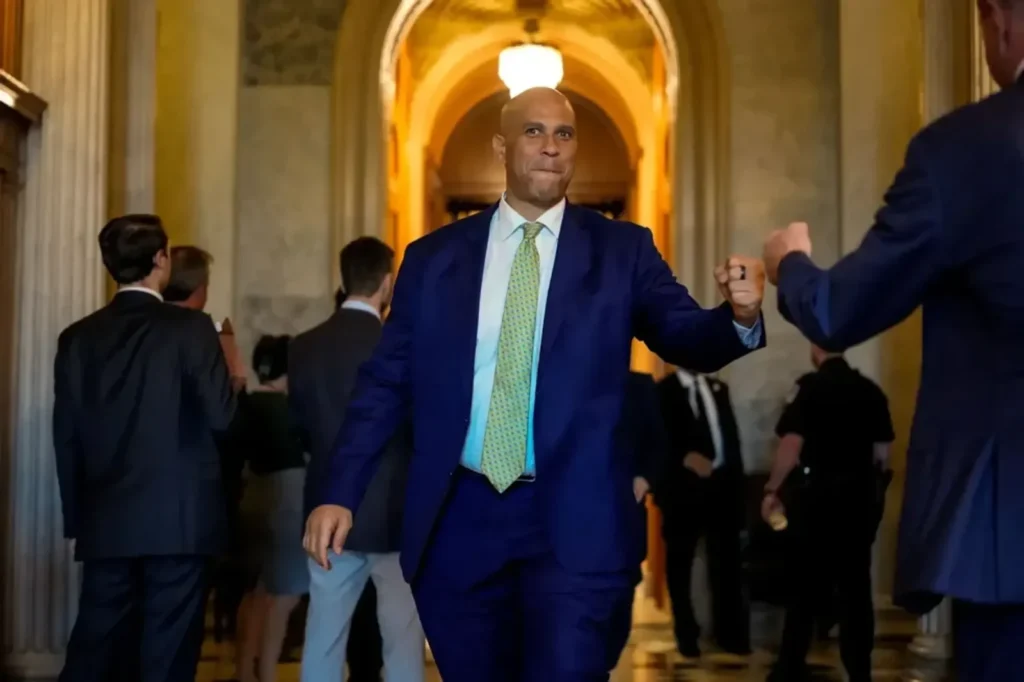
On the other side of the aisle, Democrats are also grappling with internal divisions. Some members, like Senator Cory Booker (D-NJ), are pushing for a more aggressive stance against Trump’s nominees, while others prefer a more measured approach.
“We’re trying to follow the same rules that they established,” said Senator Dick Durbin (D-IL), the top Democrat on the Judiciary Committee. He noted that Democrats have been working to confirm nominees but feel the GOP’s complaints are hollow given their own history of stalling Obama and Biden’s appointments.
Senator Martin Heinrich (D-NM) added that the focus should be on pressing issues like Medicaid cuts and rural hospital funding rather than getting bogged down in the nomination process. “This is like the insider baseball of Washington, D.C.,” he remarked, emphasizing the need to prioritize real-world concerns.
The Pressure from Trump
President Trump has been increasingly vocal about the need for his nominees to be confirmed. His administration has put significant pressure on Republican leaders, leading to a shift in the party’s strategy. Initially, Democrats allowed Marco Rubio to be confirmed as secretary of state through unanimous consent. However, they have since refused to fast-track any other picks, leading to frustration among Republicans.
Senators like Markwayne Mullin (R-OK) have pointed to this as a key factor in the current situation. “At this point, people are like, ‘You’re not giving us a choice.’ I think in February, they were like, ‘No, that isn’t something we want to talk about.’ Now, that conversation has changed, like, ‘This is your all’s decision. You guys made this happen.’”
Concerns Over Specific Nominations
While the broader issue of Senate rules and recess appointments dominates the conversation, specific nominees have also sparked controversy. Democrats have raised concerns about the nomination of Jeanine Pirro as a federal prosecutor, Mike Waltz as UN ambassador, and Paul Ingrassia as special counsel. Allegations of endangering national security and ties to white nationalist groups have further fueled the debate.
However, Republicans are focused on the larger picture, emphasizing the need to confirm nominees to support the president’s agenda. “This has just gotten beyond the pale,” said Senator John Cornyn (R-TX), highlighting the urgency of the situation.
The Path Forward
As the Senate prepares for its summer break, the debate over the best way to handle Trump’s nominees continues. Some Republicans are open to the idea of recess appointments, while others remain firmly opposed. The outcome will likely shape the future of the Senate and the balance of power between the branches of government.
With both parties navigating complex political landscapes, the coming weeks will be critical in determining how the nomination process unfolds and what it means for the administration’s ability to function effectively.




















Comment